
Insurance Resources
Sitters Beware—How House Sitting Can Affect Your Home Insurance
Discover how house sitting and home insurance interact, avoid coverage gaps, and protect your home with expert tips and best practices.

Understanding House Sitting and Insurance Requirements
House sitting and home insurance are closely connected topics that every homeowner should understand before leaving their property in someone else’s care. When you travel, having the right arrangements can protect both your home and your insurance coverage.
Quick Answer: House Sitting and Home Insurance
- Most standard policies void coverage after 30-60 days of vacancy
- Having a house sitter can maintain your “occupied” status
- Inform your insurance company about house sitting arrangements
- Some insurers offer premium discounts for using house sitters
- Both homeowners and sitters may need liability protection
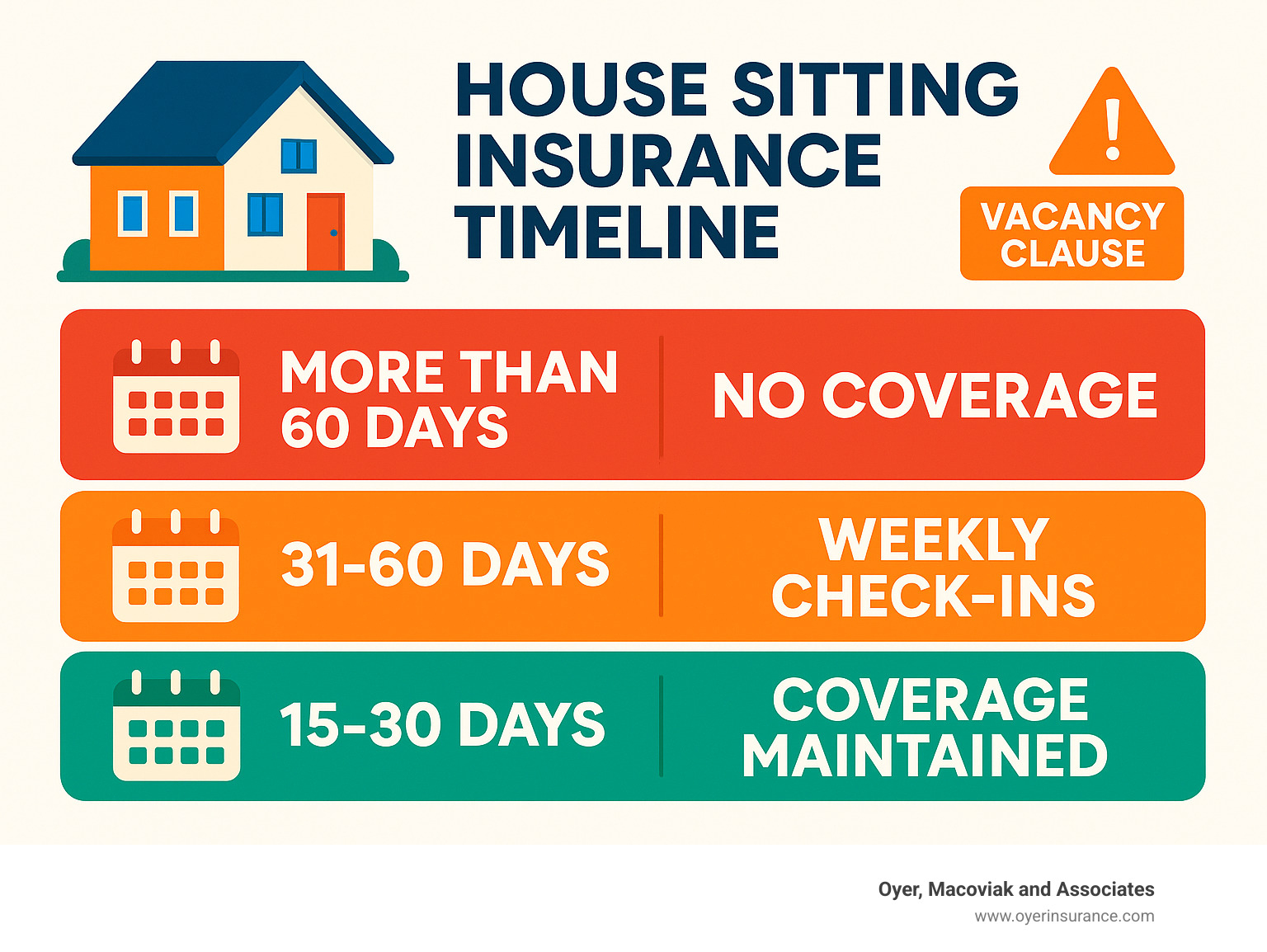
When you leave your home unoccupied for extended periods, your insurance policy may stop providing coverage. This is because vacant homes face higher risks of burglary, vandalism, and undetected damage from leaks or other issues. Insurance companies typically include a “vacancy clause” that voids coverage after a specific period – usually 30 to 60 days, depending on your provider.
Having a house sitter can help maintain your home’s “occupied” status, potentially preserving your insurance coverage during your absence. However, there are important steps to take and considerations to keep in mind:
- Notify your insurer about your plans and house sitting arrangements
- Document the agreement with your house sitter in writing
- Confirm coverage limits for damage that might occur during your absence
- Consider additional protection if valuable items remain in your home
I’m Rob Macoviak, President of Oyer, Macoviak and Associates, and I’ve helped hundreds of homeowners steer the complexities of house sitting and home insurance situations throughout my years in the insurance industry.


Ready for a Quote?
Since 1953, Oyer, Macoviak and Associates has helped clients compare insurance options while our independent agency does the shopping work. Tell us what you need once, and we can help review options from more than 30 rated insurance companies.
or Call (561) 732-9305
House sitting and home insurance vocab explained:
House Sitting 101: How Arrangements Work
House sitting comes in many flavors, from asking your neighbor to check on things to hiring professionals who’ll move in while you’re away. At its heart, house sitting is about having someone care for your home during your absence – and this arrangement can be crucial for your house sitting and home insurance situation.
The gold standard is a live-in house sitter who stays in your home the entire time you’re gone. This person typically handles mail collection, basic maintenance, plant watering, and often pet care too. From an insurance perspective, this arrangement is ideal since your home maintains its all-important “occupied” status.
“Having someone physically present in your home is infinitely better for security than leaving your home empty or relying on occasional check-ins by neighbors,” as one representative from a major house sitting platform puts it.
You have several options beyond full-time sitters too. Drop-in checks might work for shorter absences, where someone visits regularly but doesn’t stay overnight. Professional services provide vetted, insured sitters for peace of mind. Neighbor arrangements offer convenience and familiarity, while family members might be willing to stay in your home while you’re away.
When it comes to expenses, short-term sits (days to a couple weeks) usually have homeowners covering all utilities. For longer arrangements stretching into months, many homeowners negotiate shared utility payments with their sitters.
What does a “typical” house sit look like?
Most house sits involve someone temporarily moving into your home and taking on several responsibilities. Mail collection prevents overflowing mailboxes that signal nobody’s home. Garden care keeps your landscaping looking maintained and healthy. If you have a pool, sitters handle pool upkeep including chemical checks and cleaning.
House sitters also typically handle basic cleaning, ensuring your home stays tidy. They implement security measures by creating patterns of occupancy – lights turning on and off, curtains opening and closing, and general movement around the property. For many homeowners, pet care is the primary motivation – having someone feed, walk, and provide companionship to beloved animals.
Most house sits last between one week and four months, though some arrangements can extend much longer. The specific responsibilities always depend on what you and your sitter agree to in advance.
House sitter categories: friends, platforms, professionals
You’ll generally find house sitters in three main categories:
Friends and family arrangements rely on existing relationships and trust. While convenient and often free, they typically lack formal agreements or insurance considerations. This can sometimes create complications if something goes wrong.
Platform-based sitters connect with homeowners through services like TrustedHousesitters. These platforms typically include background checks, verification processes, and reviews from previous homeowners. Many offer protection plans, like TrustedHousesitters’ $1,000,000 Home and Contents Plan, adding an extra layer of security.
Professional house sitters provide sitting as a paid service and usually carry their own liability insurance. They’re often bonded (providing financial guarantees against theft or damage) and will present formal contracts outlining responsibilities. While they charge daily or weekly rates, the peace of mind may be worth the investment.
Each option has different implications for your house sitting and home insurance coverage. Professional sitters typically provide the most comprehensive protection, while informal arrangements with friends might require additional insurance considerations. Whatever you choose, clear communication about expectations and responsibilities is essential for a successful house sitting experience.
House Sitting and Home Insurance: The Occupancy Game-Changer
The relationship between house sitting and home insurance hinges on one critical factor: occupancy. Insurance companies view occupied homes as significantly lower risk than vacant ones – and for good reason!

Most standard home insurance policies include a “vacancy clause” that limits or voids coverage if your home remains unoccupied beyond a certain period. This period typically ranges from 30 to 60 days, though some policies may have shorter or longer timeframes.
“When homeowners understand how vacancy affects their coverage, they make much better decisions about protecting their property while away,” says Robert Macoviak, president of Oyer, Macoviak and Associates. “Many are surprised to learn their policy might not cover them after just a month of vacancy.”
According to research published in the Journal of Research in Crime and Delinquency, vacant properties are substantially more likely to experience burglary and vandalism. This scientific research confirms what insurers have long recognized: occupied homes face fewer claims.
When a home sits empty, the risks multiply quickly. Burglars have more time to work undetected, water leaks can cause extensive damage before findy, fire risks increase without prompt intervention, and maintenance issues compound without attention. It’s a scenario insurance companies understandably want to avoid.
“Leaving your property empty for any length of time is basically inviting trouble,” notes one house sitting service. This sentiment is echoed by home security professionals, police authorities, and insurance advisors who all strongly recommend maintaining occupancy whenever possible.
How long can a home be empty before coverage lapses?
The timeframe varies by insurance carrier and policy type. Here’s a general comparison of common vacancy limits:
| Insurance Carrier | Standard Vacancy Limit | Extended Options Available |
|---|---|---|
| Many Standard Carriers | 30 days | Up to 60 days with notification |
| Vacation Home Policies | 60 days | Seasonal coverage available |
| High-Value Home Policies | 30-60 days | Extended vacancy endorsements |
| Landlord Policies | Varies widely | Between-tenant coverage options |
Some policies require regular property checks every 48-72 hours to maintain coverage, even within the vacancy period. This is particularly common in regions with extreme weather conditions where pipe freezing or storm damage is a concern.
At Oyer, Macoviak and Associates, we recommend checking your specific policy language or contacting your agent to confirm your coverage limits before extended travel. A quick phone call can save you from potentially devastating coverage gaps later.
House sitting and home insurance: does a sitter reset the clock?
The answer is: it depends. Having a house sitter can indeed “reset the clock” on vacancy clauses, but several factors determine whether your insurance company will recognize the arrangement.
Continuous occupancy is key – most insurers require someone to stay in the home overnight on a regular basis to consider it occupied. Those occasional drop-ins from a neighbor to water plants? They’re helpful but likely won’t satisfy your insurance requirements.
Insurer approval matters too. Some insurance companies have specific requirements about who qualifies as an occupant. Family members are typically accepted without question, but non-family house sitters may need formal notification to your insurer.
Having documentation in the form of a written house sitting agreement can help establish the legitimacy of your arrangement if questions arise during a claim. This simple step provides evidence that your home wasn’t technically vacant during your absence.
The duration of stays also affects your coverage. For intermittent house sitting, insurers may look at the frequency and length of stays to determine if the property maintains “occupied” status. A house sitter who stays five nights a week might satisfy requirements that a twice-weekly visitor wouldn’t.
“The good news is that many insurance companies actually prefer that you have a house sitter while you’re away because it makes the home look ‘lived in’ and reduces risk,” explains Robert Macoviak. “Some even offer premium discounts for this arrangement.”
This intersection of house sitting and home insurance highlights why communication with your insurance provider before extended absences is so important. A quick conversation could save you thousands in potential uncovered damages.
Pros, Cons & Common Policy Pitfalls
Let’s talk about the good, the bad, and the sometimes confusing world of house sitting and home insurance. There’s a lot to love about having someone care for your home while you’re away, but there are also some potential hiccups worth knowing about.
Insurance upsides of using a house sitter
Having a house sitter is like giving your insurance policy a little boost of protection. When someone’s staying in your home, they create that all-important “lived-in” look that makes burglars think twice. Lights turning on and off, cars in the driveway, and general activity around the property are powerful deterrents that insurance companies absolutely love.
Some insurers are so fond of house sitters that they’ll actually offer you premium discounts when you use one. These companies understand that a watched home is less likely to become a claimed home, which saves everyone money in the long run.
Perhaps most importantly, a proper house sitting arrangement keeps your insurance coverage intact by preventing those pesky vacancy clauses from kicking in. Your policy stays active and ready to protect you, just as it should.
“Our house sitter found a roof leak after a storm and arranged for emergency repairs immediately,” shared one Florida homeowner we work with. “Without her, the water damage would have been catastrophic by the time we returned from our month-long trip.”
That early problem detection is invaluable. House sitters can spot and address issues like water leaks, storm damage, or break-in attempts before they spiral into major insurance claims. Plus, having someone on-site means there’s immediate action during emergencies like power outages or frozen pipes.
Potential downsides homeowners overlook
While house sitting offers wonderful benefits, there are some insurance-related pitfalls that many homeowners don’t consider until it’s too late.
Liability claims can arise if your house sitter gets injured on your property. Your standard homeowners policy typically covers this, but there might be limits for long-term arrangements that you should discuss with your insurance professional.
Sitter negligence is another consideration. If your sitter accidentally causes damage by leaving a faucet running or causing a fire, your insurance will likely cover the damage, but your future premiums might take a hit.
Those house keys you hand over? If they get lost and a burglary occurs without forced entry, some insurers may deny claims due to what they consider key mismanagement. It sounds harsh, but it happens more often than you might think.
If your sitter is caring for your pets and Fido decides to bite the mail carrier, pet damage liability questions can get complicated. Who bears responsibility in these cases isn’t always straightforward.
And while it’s rare, there are cases where house sitters have stolen or damaged valuable items, requiring careful documentation for claims. Having a detailed inventory of your belongings before you leave can save you tremendous headaches later.
At Oyer, Macoviak and Associates, we’ve seen claims denied when homeowners failed to tell their insurance company about house sitting arrangements or when the sitter didn’t maintain regular occupancy as required by the policy. To avoid these pitfalls, we recommend reviewing your Homeowners Insurance: Read the Fine Print and having a quick chat with your agent before your next big trip.
A little preparation goes a long way when it comes to house sitting and home insurance. The right arrangement can give you peace of mind while you’re away and keep your insurance protection strong.
What Insurance Coverage Do Homeowners and Sitters Actually Need?
When it comes to house sitting and home insurance, understanding exactly what coverage you need can be confusing. Let’s break it down into practical terms that make sense for both homeowners and house sitters.
House sitting and home insurance: is the homeowner policy enough?
For most short visits from a friend or family member watching your home, your standard homeowners policy usually provides adequate coverage—but there are some important details to be aware of.
Your homeowners policy typically covers your home’s structure, your belongings, and liability for injuries that happen on your property. However, house sitters aren’t automatically included in all aspects of your coverage.
“Many homeowners assume their policy covers everything during their absence, but that’s not always the case,” says Robert Macoviak, president of Oyer, Macoviak and Associates. “The devil is in the details when it comes to house sitting and home insurance.”
Your policy has some natural limitations to be mindful of. First, only you and permanent household members are considered “named insureds”—meaning your house sitter’s personal belongings aren’t protected under your policy. If their laptop gets stolen while staying at your place, that’s on their insurance, not yours.
While your liability coverage should handle injuries to your house sitter or their visitors, paid sitters might fall into a gray area with some insurance companies. And those valuable items you’re leaving behind? Standard policies often cap coverage for jewelry, art, and collectibles at surprisingly low amounts—sometimes just $1,500 for jewelry.
Perhaps most importantly, many insurers require notification about extended absences or house sitting arrangements. A quick call to your agent before your trip can prevent coverage issues later.
If you’re using professional house sitting services, take these additional steps:
- Ask to see proof of the sitter’s personal liability insurance
- Check what protections are offered by platforms like TrustedHousesitters
- Consider an umbrella policy for extra protection, especially if your home has features like pools or trampolines that increase liability risk
Should a sitter buy their own policy?
If you’re the person doing the house sitting—especially if you do it regularly—having your own insurance makes good sense.
“When I first started house sitting, I had no idea I needed my own insurance,” shares Maria, a frequent house sitter from Tampa. “Now I wouldn’t dream of taking a sitting job without coverage. It’s protection for me and peace of mind for the homeowners.”
Regular or professional house sitters should consider carrying general liability insurance, which covers you if you accidentally damage the homeowner’s property or if someone gets hurt while visiting. Professional liability insurance (sometimes called errors and omissions coverage) protects you against claims that you were negligent in your house sitting duties—like forgetting to lock a door that leads to a break-in.
Don’t forget about your own belongings! Your personal property needs coverage while you’re staying in someone else’s home. Services like Thimble now offer flexible house sitter insurance by the hour, day, or month with generous coverage limits of $1-2 million.
Professional sitters should be ready to provide a Certificate of Insurance (COI) to homeowners. This simple document shows you have adequate coverage and helps establish trust from the start.
House sitting insurance isn’t just paperwork—it’s a safety net that protects both parties financially and creates a foundation of trust for your house sitting relationship. The small cost of coverage is worth the significant protection it provides.
For more specifics about insurance options for both homeowners and sitters, check out our detailed guide on House Sitting Insurance Options.
Risk-Reducing Best Practices & Agreement Essentials
When it comes to house sitting and home insurance, a little preparation goes a long way. Creating a solid agreement and following smart routines doesn’t just protect your property – it gives everyone peace of mind.
Core clauses to include in a house sitting agreement
A thoughtful house sitting agreement is like a roadmap that helps prevent misunderstandings before they happen. Start with clearly outlining responsibilities so your sitter knows exactly what’s expected – from how often to water your finicky ficus to the specific schedule your pets need to follow.
“A written agreement isn’t about lack of trust—it’s about clarity,” as one house sitting platform representative puts it. “It ensures both parties have the same expectations and understand their responsibilities.”
Be specific about utility arrangements, especially for longer sits. While homeowners typically cover all utilities for short stays, you might want to negotiate partial payments for extended arrangements. Don’t forget to address internet usage and streaming services – nobody wants an unexpected bill because someone binged four seasons of a show in ultra-high definition!
Include clear guidelines about emergency repairs. What dollar amount can the sitter authorize without calling you first? Which plumber or electrician do you prefer they call? How will they get reimbursed if they need to pay for something urgent? Having these details in writing prevents panic when something goes wrong.
The agreement should also contain an insurance declaration that outlines your coverage and any limitations. If your sitter carries their own insurance, note that too. Be clear about who reports potential claims and who’s responsible for paying the deductible if something happens.
Finally, spell out your security and privacy expectations. Detail how keys should be managed, how the alarm system works, which areas of the home are off-limits, and your rules about the sitter having guests over.
Daily routines that keep insurers happy
Insurance companies love predictable routines that minimize risk. Regular mail collection is a must – nothing says “empty house” like an overflowing mailbox or packages piling up at the door. Your sitter should gather mail daily and store it securely.
Even with someone staying in your home, using light timers creates varied lighting patterns that improve security. Encourage your sitter to occasionally play music or TV sounds and regularly adjust blinds or curtains to create that lived-in look insurers prefer.
House sitting and home insurance work best together when potential problems are caught early. Ask your sitter to make leak checks part of their routine – a quick look under sinks, around toilets, and in basements can catch small drips before they become major disasters. After heavy rain, a check of lower-level areas can prevent mold and water damage.
Maintaining security systems is another crucial task. Smoke detectors and carbon monoxide alarms should have working batteries, and security cameras should stay operational. Make sure your sitter knows how to properly arm and disarm your alarm system.
Don’t overlook exterior maintenance. An overgrown lawn or unshoveled sidewalk signals neglect. Pool care, proper trash management, and general yard upkeep not only keep your property looking nice – they satisfy most insurers’ requirements for ongoing maintenance.
For more detailed guidance about keeping your home secure during absences, check out our article on Homeowners Insurance: How to Make Your Home Secure During Your Summer Vacation.
At Oyer, Macoviak and Associates, we’ve seen how proper house sitting and home insurance arrangements give homeowners true peace of mind while traveling. Taking time to establish clear agreements and routines isn’t just paperwork – it’s protection for your most valuable asset.
Handling Damage, Theft or Injury: Step-by-Step Claims Guide
Despite our best efforts, sometimes things go wrong during a house sit. When the unexpected happens, knowing exactly what to do can make all the difference in how smoothly your insurance claim goes.
Immediate actions within 24 hours
When damage, theft, or injury occurs during a house sit, those first 24 hours are absolutely critical. The steps you take right away can dramatically impact whether your claim gets approved.
First things first – secure the scene. This means addressing any immediate safety concerns like shutting off water if there’s a leak or covering broken windows. Your safety always comes first, so don’t hesitate to call emergency services if needed.
Next, document everything thoroughly. Your smartphone becomes your best friend here. Take detailed photos and videos of all damage from multiple angles. Make a comprehensive list of affected items or areas, and note down exactly when and how the incident occurred. If neighbors or others witnessed anything, politely ask for their account of what happened.
“The photos I took right after my basement flooded during a house sit made all the difference in my claim,” shares one Florida homeowner. “My insurance adjuster specifically mentioned how helpful that immediate documentation was.”
Promptly notify the homeowner through your agreed communication channel. Stick to the facts without assigning blame, share your documentation, and discuss immediate next steps. Clear communication helps maintain trust during a stressful situation.
For theft, vandalism, or suspicious damage, file a police report right away. Insurance companies typically require this for these types of claims. Get the report number and officer’s contact information, and request copies of everything for your records.
Finally, take reasonable steps to mitigate further loss. Make temporary repairs if possible to prevent additional damage, secure the property, and preserve damaged items for the insurance adjuster to inspect.
“The first 24 hours after an incident are critical,” says Robert Macoviak, president of Oyer, Macoviak and Associates. “Proper documentation and prompt reporting can make the difference between a claim being approved or denied.”
Working with insurers and sitters to settle claims
Once you’ve handled the immediate situation, it’s time to steer the claims process itself.
For homeowners, filing your insurance claim promptly is essential. Contact your insurance company as soon as possible, providing them with your house sitting agreement, all documentation collected, and a clear explanation of your occupancy arrangements. Be transparent about the house sitting situation from the start.
When it comes to proving ownership and value, this is where that home inventory you hopefully created before departure becomes invaluable. Share receipts, appraisals, or photos of damaged items, and obtain repair or replacement estimates from reputable sources.
The question of who pays the policy deductible can sometimes be tricky. Check your house sitting agreement for guidance. For smaller damages under $1,000, many homeowners and sitters find it reasonable to work out arrangements directly, sometimes splitting costs. For larger claims, your insurance policy will typically cover damages minus your deductible.
If you used a service like TrustedHousesitters, don’t forget to explore their platform protection plans. These often provide supplementary coverage to your primary insurance. Follow their specific procedures and timelines for filing claims under these plans.
Be aware that your insurance company may engage in a subrogation process – seeking recovery from responsible parties if negligence was involved. This typically happens behind the scenes, but it’s important to cooperate with any investigations while maintaining professional relationships.
“For minor damage under $1,000, we often see homeowners and sitters working out arrangements directly,” notes a representative from a popular house sitting platform. “Many platforms recommend that both parties contribute at least $250 toward repairs for minor damages.”
The claims process for house sitting and home insurance situations doesn’t need to be overwhelming. With proper documentation, clear communication, and prompt action, most claims can be resolved satisfactorily for everyone involved. At Oyer, Macoviak and Associates, we guide our clients through this process with personalized support every step of the way.
Frequently Asked Questions about House Sitting and Home Insurance
Does a house sitter invalidate or protect my home insurance?
Having a house sitter typically works in your favor by maintaining your home’s “occupied” status – which is exactly what insurance companies want to see. That said, there are some important details to keep in mind:
You should definitely notify your insurance company before arranging a house sitter. Most insurers appreciate this proactive step and may even offer guidance specific to your policy.
For the arrangement to truly “count” as occupancy, your sitter needs to stay overnight regularly – not just pop in to water plants. As one homeowner finded: “My insurer explained that daily check-ins weren’t enough – they wanted someone actually sleeping in the home at least 4 nights a week to maintain coverage.”
House sitting and home insurance requirements vary between providers. Some insurers are quite flexible about who qualifies as an occupant, while others have stricter definitions or may request documentation of your arrangement.
In the rare situation where an unauthorized person causes serious damage through negligence, you could face complications with your claim. This is why being upfront with your insurance provider saves headaches down the road.
What insurance should professional house sitters carry?
Professional house sitters benefit from having their own insurance protection. The most comprehensive coverage includes:
General liability insurance with coverage between $1-2 million protects against accidental damage to the homeowner’s property and potential injuries to visitors. This is the foundation of professional house sitting protection.
Professional liability insurance (sometimes called errors and omissions coverage) kicks in if you’re accused of negligence in your house sitting duties – like forgetting to lock a door that leads to a break-in.
Personal property coverage protects the sitter’s own belongings while staying in someone else’s home. Your personal items aren’t automatically covered by the homeowner’s policy!
Companies like Thimble have created flexible policies specifically for house sitters that can be purchased by the day, week or month. These provide immediate coverage and certificates you can share with homeowners.
“I started carrying my own insurance after a client’s pipe burst while I was house sitting,” shares a professional sitter. “Though it wasn’t my fault, having insurance gave everyone peace of mind and protected my savings from potential disputes. The $300 annual premium is worth every penny compared to what I could have lost.”
Who pays utilities during a long-term sit?
The question of utilities should be addressed upfront in your house sitting agreement to avoid misunderstandings later. The general practice varies based on the length of stay:
For short visits lasting a few days to a couple weeks, homeowners typically cover all utilities. After all, the basic systems would be running whether someone was there or not.
Medium-length arrangements (1-3 months) often involve some negotiation. Many homeowners appreciate a contribution toward usage-based utilities, especially if the sitter works from home or uses amenities like hot tubs.
For extended stays beyond three months, it’s becoming increasingly common for sitters to cover usage-based utilities like electricity, water and gas. Fixed expenses like mortgage, property taxes and HOA fees always remain the homeowner’s responsibility.
House sitting and home insurance considerations don’t typically extend to utility arrangements, but clarity helps maintain good relationships. As Robert Macoviak from Oyer, Macoviak and Associates notes, “The best house sitting arrangements are those where expectations about everything – including utilities – are discussed openly before the homeowner departs.”
Some homeowners request a refundable utility deposit for long-term sits, which can be returned if usage stays within normal ranges. This approach provides protection without creating friction.
“I’ve house sat for over a dozen families,” shares one experienced sitter, “and the most successful arrangements always included clear utility expectations. For winter sits in cold climates, we even agreed on thermostat settings to avoid surprise heating bills!”
Conclusion
Navigating house sitting and home insurance doesn’t have to be complicated, but it does require some thoughtful planning. When you understand how your insurance policy handles those empty periods at your home, you can make smart choices that keep your coverage intact while you’re enjoying your time away.
Here’s what’s really important to remember:
That vacancy clause in your policy? It’s a big deal. Most insurers will limit your coverage after your home sits empty for 30-60 days. Having someone stay in your home while you’re away isn’t just about collecting the mail – it’s about maintaining that crucial “occupied” status that keeps your insurance valid.
Think of your house sitter as both a caretaker and an insurance protector. Their presence helps preserve your coverage and naturally deters those looking for easy targets. When your lights turn on and off, when someone brings in packages and keeps the yard maintained, your home simply doesn’t look vacant.
Before you hand over your keys, take time to clarify everyone’s insurance responsibilities. Does your sitter need their own coverage? Have you notified your insurance company about the arrangement? Clear communication prevents headaches later.
Put everything in writing! A solid house sitting agreement isn’t about lack of trust – it’s about clarity. If something does go wrong, having documentation, regular communication records, and a clear understanding of responsibilities makes the claims process much smoother.
Professional house sitters should absolutely carry their own liability insurance. And as a homeowner, reaching out to your insurance company before your trip is always a smart move. A quick conversation can confirm your coverage stays intact with your house sitting arrangement.
At Oyer, Macoviak and Associates, we’ve been helping homeowners across Florida, Georgia, North Carolina, and Tennessee figure out these details since 1953. Our insurance professionals can provide guidance custom to your specific situation, policy, and travel plans.
Whether you’re heading out for an extended vacation, temporarily relocating for work, or regularly traveling throughout the year, the right house sitting and home insurance arrangements provide real peace of mind. You can enjoy your time away knowing your home is both cared for and properly covered.
For more detailed information about home insurance solutions designed for your specific needs, visit our home insurance page or reach out to our team. We’re happy to help you create a plan that works for your unique situation.

Robert Macoviak is the President of Oyer, Macoviak and Associates. Oyer, Macoviak and Associates is the oldest independent insurance agency in Boynton Beach and has been in business since 1953. Oyer, Macoviak and Associates are vested members of the community who are committed to doing business face-to-face and being your insurance advocate in times of need.