
Insurance Resources
Understanding the Homeowners Insurance Crisis in Florida
Discover the causes behind the Florida homeowners insurance crisis and learn how legislative reforms and homeowner actions can offer relief.

The Florida homeowners insurance crisis is creating significant challenges for families and business owners across the state. Here’s a quick overview of why this crisis matters:
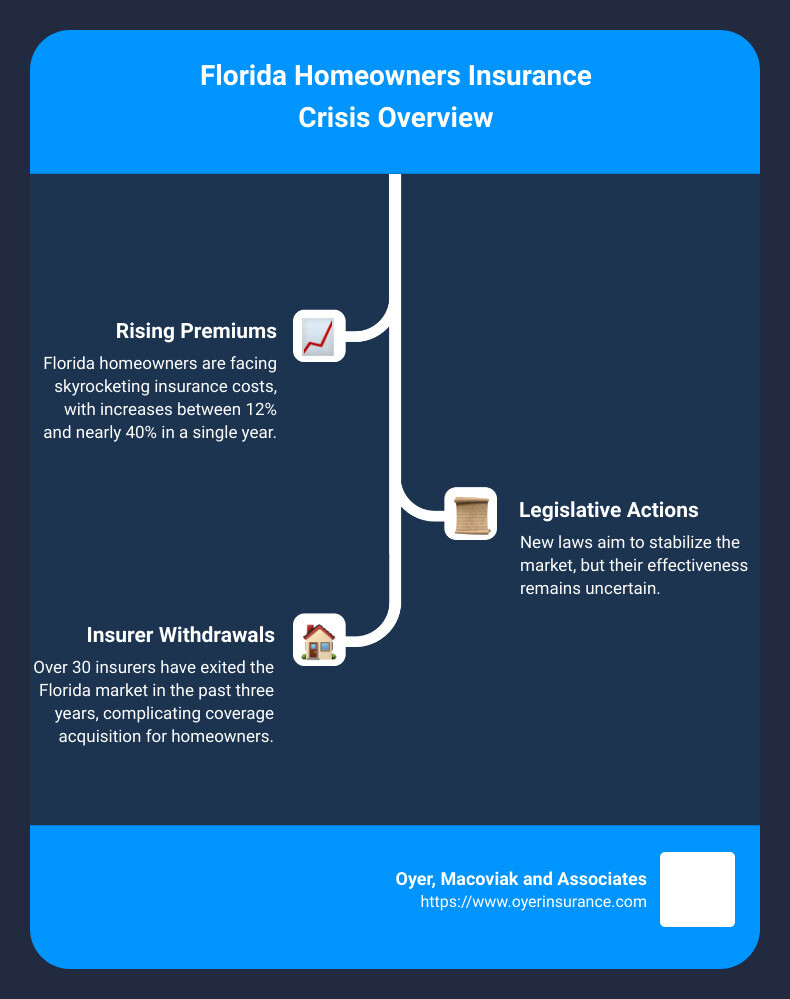
- Rising Premiums: Florida homeowners are facing skyrocketing insurance costs, sometimes seeing increases between 12% and nearly 40% in a single year.
- Legislative Actions: New laws have been enacted to try to stabilize the market, but the effectiveness of these regulations remains to be seen.
- Insurer Withdrawals: Over 30 insurers have left the Florida market in the past three years, making it difficult for homeowners to find coverage.
What You Need to Know:
1. High Litigation Costs: Florida accounts for 79% of the country’s home insurance lawsuits, despite only holding 9% of the claims.
2. Fraudulent Claims: The state has been plagued by fraudulent activities, such as inflated repair claims and the “assignment of benefits” scam.
3. Natural Disasters: Weather-related damages continue to be a major risk, costing insurers billions and adding strain to an already unstable market.
Hello, I’m Rob Macoviak, owner at Oyer, Macoviak and Associates. With over 25 years of experience in the insurance industry, I have knowledge of the Florida homeowners insurance crisis and its impact on local families and businesses. Let’s dive into the details to understand this issue better and explore potential solutions.

Ready for a Quote?
Since 1953, Oyer, Macoviak and Associates has helped clients compare insurance options while our independent agency does the shopping work. Tell us what you need once, and we can help review options from more than 30 rated insurance companies.
or Call (561) 732-9305
The Current State of Florida’s Homeowners Insurance Market
Key Factors Driving the Crisis
The Florida homeowners insurance crisis is a perfect storm of challenges. Let’s break down the key factors:
Natural Disasters
Florida is no stranger to natural disasters. Hurricanes like Ian and Idalia have caused billions in damages. These frequent and intense storms lead to a surge in insurance claims, making it hard for insurers to stay profitable.
Reinsurance Costs
Reinsurance is insurance for insurance companies. It helps them manage risk. But with more natural disasters, reinsurance premiums have skyrocketed. This cost is passed down to homeowners, making their premiums higher.
Litigation-Friendly Environment
Florida has a reputation for being litigation-friendly. The state accounts for only 9% of the country’s home insurance claims but 79% of its home insurance lawsuits. Many of these lawsuits are fraudulent, driving up costs for insurers and, ultimately, for homeowners.
Fraudulent Claims
Fraud is a big issue. Scammers often convince homeowners to file inflated claims, especially after storms. This is called the “assignment of benefits” scam. Contractors promise to handle everything if homeowners sign over their insurance benefits. They then file exaggerated claims and, if the insurer disputes the amount, the contractors sue. This cycle results in massive costs for insurance companies.
Impact on Homeowners
The crisis affects homeowners in several ways:
Increased Premiums
Florida homeowners are paying sky-high insurance premiums. The average cost is around $6,000 per year, more than triple the national average. This financial strain is a burden for many families.
Policy Cancellations
Many insurers are leaving Florida or canceling policies. Over 30 insurance providers have exited the market in the past three years. This leaves homeowners scrambling to find new coverage, often at much higher rates.
Limited Coverage Options
With fewer insurers in the market, options are limited. Some companies no longer offer hurricane or flood coverage. Homeowners may have to turn to Citizens Property Insurance, a state-owned insurer, which often has higher rates and less comprehensive coverage.
Financial Strain
The combination of high premiums, policy cancellations, and limited options puts a significant financial strain on homeowners. Some are even considering moving out of the state to escape these costs.
Governor Ron DeSantis and the Florida legislature have introduced reforms to address these issues. Laws like Senate Bill 2-A aim to reduce fraudulent lawsuits and stabilize the market. However, it will take time to see the positive impacts of these reforms.

Next, we’ll explore why homeowners insurance costs are skyrocketing in Florida, focusing on natural disasters, reinsurance, litigation, and fraudulent claims.
Why Are Homeowners Insurance Costs Skyrocketing in Florida?
Natural Disasters and Climate Change
Florida’s unique geography makes it a magnet for natural disasters. The state faces hurricanes, flooding, and even sinkholes. Hurricanes like Hurricane Ian and Hurricane Idalia have caused billions in damages, putting immense pressure on insurance companies.
Climate change is making things worse. Warmer oceans fuel more intense hurricanes, leading to more frequent and severe storms. The state has gone from experiencing one billion-dollar disaster a year in the 1980s to four annually over the past five years.
Sea level rise is another concern, making flooding more common and severe. This increases the risk for homeowners and drives up insurance costs.
Reinsurance Costs
Insurance companies don’t just rely on premiums from policyholders; they also buy reinsurance to protect themselves from catastrophic losses. Think of reinsurance as insurance for insurance companies. However, the cost of reinsurance is skyrocketing due to the increasing frequency and severity of natural disasters.
Reinsurance premiums have surged, and these costs are often passed down to homeowners. This added expense makes insurance less affordable for many Floridians. Some insurers have even chosen to leave the state, unable to manage the financial risk.
Litigation and Fraud
Florida’s litigation-friendly environment is another major factor. The state accounts for 79% of the nation’s home insurance lawsuits, despite only having 9% of the claims. This disproportionate number of lawsuits drives up operating costs for insurers.
Fraudulent claims also plague the market. Common scams like Assignment of Benefits (AOB) allow contractors to inflate repair costs and sue insurers without the homeowner’s consent. This puts financial strain on insurance companies, making it difficult for them to stay profitable.
Roofing scams are particularly rampant. Contractors convince homeowners to sign over their insurance benefits, then inflate repair costs and sue insurers. This has led to billions in underwriting losses for insurance companies.
Florida previously had a “one-way attorney fee” system, which allowed plaintiffs to recover attorney fees if they won any amount in a lawsuit against their insurer. This led to a surge in litigation, further straining the financial resources of insurance companies.
Recent legislative changes aim to curb this by eliminating one-way attorney fees and banning AOB forms for home insurance losses. However, it will take time to see the positive impacts of these reforms.
Next, we’ll dig into the legislative actions and reforms aimed at addressing the Florida homeowners insurance crisis.
Legislative Actions and Reforms
Recent Legislative Measures
Florida lawmakers have been busy trying to stabilize the chaotic homeowners insurance market. Two major reforms, Senate Bill 76 and Senate Bill 2-A, were enacted to tackle the root causes of the crisis.
Senate Bill 76 introduced several key changes. One significant measure is the restriction on roof age. Insurers can now refuse to cover roofs older than 15 years unless they pass an inspection. This aims to reduce the risk of claims from outdated roofs.
Senate Bill 2-A took further steps by eliminating one-way attorney fees and banning assignment of benefits (AOB) forms. Previously, homeowners could sign AOB forms allowing contractors to negotiate directly with insurers. This often led to inflated claims and increased litigation. Now, homeowners retain control over their policies, which helps reduce fraudulent lawsuits.
Another important initiative is the My Safe Florida Home Program. This program offers grants to homeowners for hurricane mitigation projects, such as reinforcing roofs and installing storm shutters. Eligible homeowners can receive up to $10,000, making their homes safer and potentially lowering their insurance premiums.
Future Legislative Proposals
Looking ahead, Florida lawmakers are considering additional measures to stabilize the insurance market further. Upcoming bills in the next legislative session may focus on:
- Expanding the My Safe Florida Home Program to include more homeowners and higher grant amounts.
- Introducing stricter regulations on insurance companies to ensure they remain financially stable.
- Providing tax relief for homeowners facing steep premium increases.
One proposal under discussion is for Citizens Insurance to take over wind coverage for all Floridians. This model, similar to California’s earthquake insurance program, aims to lower premiums by spreading the risk.
These potential reforms show a commitment to addressing the Florida homeowners insurance crisis. However, the effectiveness of these measures will depend on their implementation and the response from the insurance industry.
Next, let’s explore what homeowners can do to mitigate risks and protect their properties.
How Homeowners Can Mitigate Risks
Keeping Your Roof Updated
Regular roof maintenance is crucial. Inspect your roof frequently and fix minor damage immediately. A small leak can turn into a big problem if ignored. If your roof is nearing 15 years old, consider replacing it. Florida law now prohibits insurers from denying coverage based solely on roof age if it’s less than 15 years old or has at least five years of life left.
Tip: Schedule annual roof inspections to catch issues early. This can help you maintain insurance eligibility and avoid costly repairs.
Installing Wind Mitigation Features
Wind mitigation features can save you money on your insurance premiums. Florida state law requires insurance companies to offer discounts for homes with certain wind protection features. These include hurricane straps, reinforced roofing, and storm shutters.
Benefits:
– Discounts on premiums.
– Reduced risk of severe damage.
– Increased home safety.
Consider adding these features during your next home improvement project. The initial cost can pay off in the long run with insurance savings and better protection for your home.
Securing Flood Insurance
Flood insurance is essential, especially in high-risk areas. Standard homeowners insurance often doesn’t cover flood damage. Review your policy to identify any gaps.
Steps to Take:
– Evaluate Risk: Determine if your home is in a high-risk flood area.
– Get Coverage: Purchase a separate flood insurance policy if needed.
– Review Annually: Ensure your coverage is up-to-date and meets your needs.
Flood insurance provides comprehensive protection and peace of mind, knowing you’re covered in the event of a flood.
By staying proactive with roof maintenance, installing wind mitigation features, and securing flood insurance, you can better protect your home and potentially lower your insurance costs.
Frequently Asked Questions about the Florida Homeowners Insurance Crisis
What is causing the Florida homeowners insurance crisis?
The Florida homeowners insurance crisis is a result of several factors converging at the same time:
Natural Disasters: Florida is frequently hit by hurricanes and other natural disasters. Over the past five years, the state has experienced an average of four billion-dollar disasters annually. Hurricanes like Ian and Idalia have caused extensive damage, leading to a surge in insurance claims.
Reinsurance Costs: Reinsurance acts as a safety net for insurance companies, but its costs have skyrocketed due to the increased frequency and severity of natural disasters. Higher reinsurance premiums are passed down to homeowners, raising their insurance costs.
Litigation and Fraud: Florida’s litigation-friendly environment has made it easy for policyholders to sue their insurers. This has led to a high volume of lawsuits, many of which are fraudulent. Florida accounts for only 9% of the country’s home insurance claims but 79% of its home insurance lawsuits. This rampant litigation drives up costs for insurers and, consequently, for homeowners.
Fraudulent Claims: Fraudulent claims, especially related to roofing scams, have further strained the insurance market. These scams often involve contractors convincing homeowners to file unnecessary claims, which increases overall claim costs.
How are legislative reforms addressing the crisis?
Several legislative measures have been introduced to address the Florida homeowners insurance crisis:
Senate Bill 76: This bill aims to curb fraudulent claims and reduce litigation costs. It includes reforms like limiting attorney fees and tightening rules around roofing claims.
Senate Bill 2-A: This comprehensive reform package targets the root causes of market instability. It eliminates one-way attorney fees and restricts the assignment of benefits, which have been significant contributors to the high volume of litigation.
My Safe Florida Home Program: This program has been extended to more properties and now offers higher grants for low-income homeowners. It encourages homeowners to make their homes more resilient to wind damage, potentially lowering insurance costs.
Attorney Fee Reforms: These reforms are designed to discourage frivolous lawsuits by making it harder for plaintiffs to recover attorney fees in litigation against insurers.
What can homeowners do to protect themselves?
Homeowners can take several steps to protect themselves and potentially lower their insurance costs:
Roof Maintenance: Regular roof inspections and timely repairs can prevent damage and make your home more insurable. Homes with roofs under 15 years old are less likely to be denied coverage based on roof age, thanks to recent legislative changes.
Wind Mitigation Features: Installing wind mitigation features like hurricane shutters and reinforced garage doors can make your home more resilient to wind damage. These improvements may qualify you for discounts on your insurance premiums.
Securing Flood Insurance: Given Florida’s vulnerability to flooding, securing a separate flood insurance policy is crucial. Standard homeowners insurance policies typically do not cover flood damage. Check if your home is in a high-risk flood area and get the necessary coverage.
Policy Reviews: Regularly review your insurance policy to ensure it meets your needs. Make sure your coverage is up-to-date and consider adjusting it based on any home improvements or changes in risk factors.
By understanding the causes of the crisis and taking proactive steps, homeowners can better steer the challenging insurance landscape in Florida.
Finally
The Florida homeowners insurance crisis is a complex issue, driven by natural disasters, rising reinsurance costs, and rampant litigation. Homeowners are facing increased premiums, policy cancellations, and limited coverage options. Legislative measures aim to stabilize the market, but change will take time.
Ongoing Challenges
Despite recent reforms, challenges remain. Insurance companies are still struggling with high litigation costs and fraudulent claims. Natural disasters like hurricanes continue to pose significant risks. The market’s volatility makes it hard for homeowners to find reliable and affordable coverage.
Potential Solutions
Legislative actions such as Senate Bill 2-A and the My Safe Florida Home Program offer hope. These measures aim to reduce fraudulent claims and litigation costs, potentially leading to more stable premiums. Homeowners can also take proactive steps like updating their roofs, installing wind mitigation features, and securing flood insurance to better protect their homes and possibly lower their premiums.
Oyer, Macoviak and Associates
Navigating this challenging insurance landscape can be daunting. That’s where we come in. At Oyer, Macoviak and Associates, we offer personalized insurance solutions custom to your specific needs. Our professionals are here to guide you through policy adjustments, claims, and any questions you might have. With our deep understanding of the market dynamics, we can help you find the most competitive rates and ensure your home is adequately protected.
By staying informed and proactive, homeowners can better steer the uncertainties of the Florida home insurance market. Reach out to us for a consultation to secure your property with confidence and peace of mind.

Robert Macoviak is the President of Oyer, Macoviak and Associates. Oyer, Macoviak and Associates is the oldest independent insurance agency in Boynton Beach and has been in business since 1953. Oyer, Macoviak and Associates are vested members of the community who are committed to doing business face-to-face and being your insurance advocate in times of need.