
Insurance Resources
Understanding Long-Term Care Insurance Costs in Florida: A Financial Guide
Discover key factors affecting long term care insurance cost in Florida. Get tips on reducing premiums and choosing the best policy for your needs.

Long-term care insurance cost in Florida can vary a lot depending on where you live and what kind of care you need.
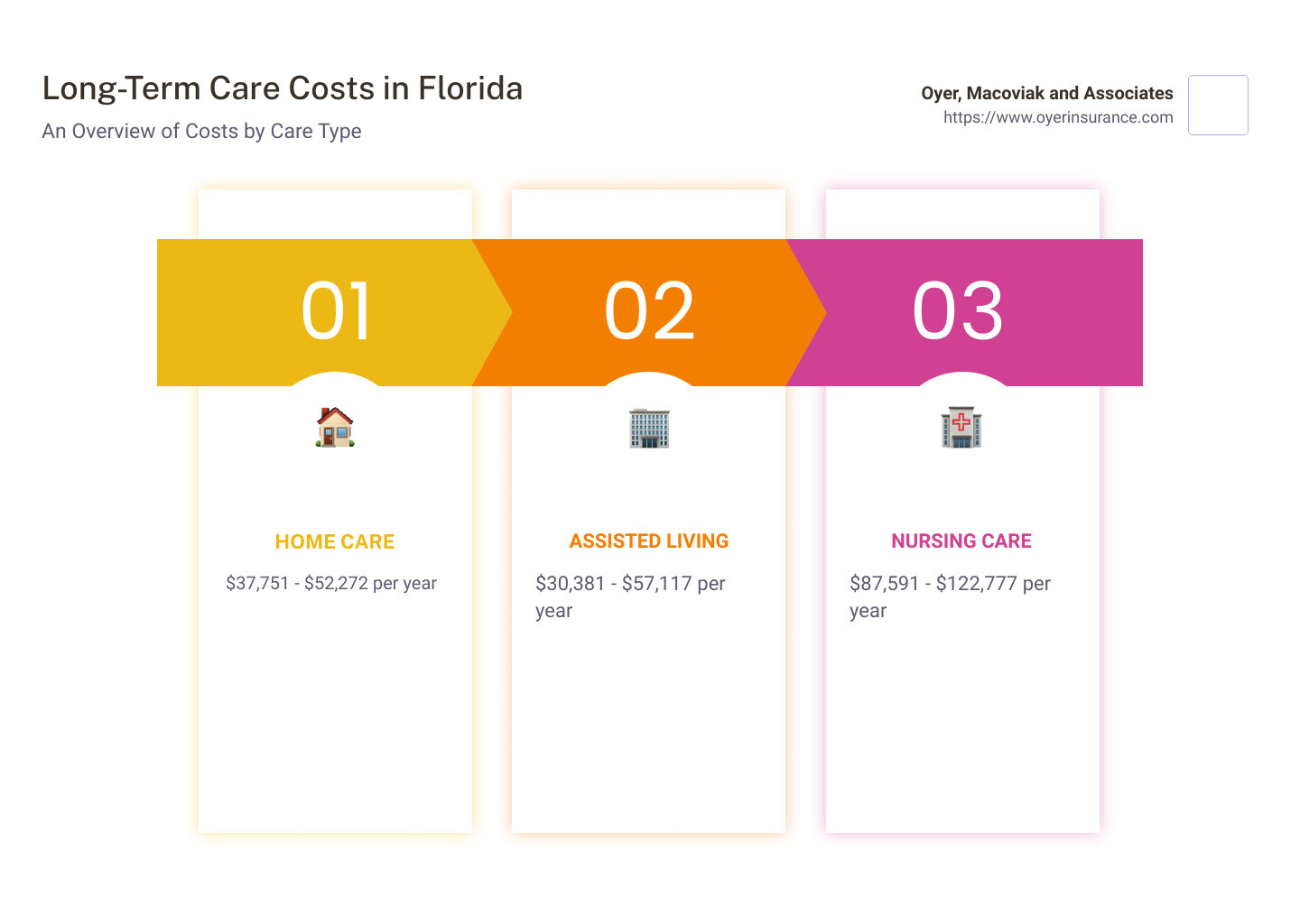
To give you a quick answer, here’s a summary of long-term care costs in Florida:
- Home Care: $37,751 – $52,272 per year
- Assisted Care: $30,381 – $57,117 per year
- Nursing Care: $87,591 – $122,777 per year
These numbers highlight why planning for long-term care is crucial in Florida, especially with its aging population.
Florida’s demographics show a significant number of older adults, many nearing or surpassing retirement age. As people age, the likelihood of needing long-term care increases. This makes it essential for Florida residents to plan ahead. The rising costs of care and the differences in prices across cities like Miami, Naples, and Jacksonville underline the need to understand and prepare for these expenses.

Ready for a Quote?
Since 1953, Oyer, Macoviak and Associates has helped clients compare insurance options while our independent agency does the shopping work. Tell us what you need once, and we can help review options from more than 30 rated insurance companies.
or Call (561) 732-9305
Without proper planning, long-term care costs can quickly become overwhelming. By learning more about long-term care insurance and understanding what influences costs, you can make informed decisions that will protect your financial future.
What is Long-Term Care Insurance?
Long-term care insurance is a type of insurance designed to cover the costs associated with long-term care services. These services are often needed when a person can no longer perform basic activities of daily living (ADLs) such as eating, bathing, or dressing due to chronic illness, disability, or aging.
Basic Features
Coverage Settings: Long-term care insurance can help pay for care received in various settings, including:
- Nursing Homes
- Assisted Living Facilities
- In-Home Care
Benefit Triggers: To start receiving benefits, a healthcare provider typically needs to certify that you need assistance with at least two out of six ADLs or need supervision due to cognitive impairment.
Payment Structures: Policies may vary in how they pay out benefits. Some reimburse the actual cost of care, while others provide a fixed monthly benefit.
Importance
Why It Matters: According to the Administration for Community Living, more than 66% of 65-year-olds will require long-term care at some point. Without insurance, the costs can quickly deplete your savings. Long-term care insurance allows you to cover these needs for a fraction of the cost, protecting your financial future.
Eligibility: It’s crucial to purchase long-term care insurance before you need it. You likely won’t qualify if you’re already receiving long-term care or need assistance with ADLs. Conditions such as Alzheimer’s, Parkinson’s, or the use of mobility aids like walkers or wheelchairs can also disqualify you.
Real-Life Impact
Consider the story of Don B. from Ft Myers, Florida. Don was concerned he might not qualify for long-term care insurance due to arthritis. However, after consulting with professionals at Oyer, Macoviak and Associates, he found a plan that accepted him. His application was approved, and he now has peace of mind knowing he is covered.
Cost Variations: The cost of long-term care can vary significantly across Florida. For example, nursing care is 41% more expensive in Naples than in Jacksonville. Understanding these variations can help you choose the right policy and coverage amount.
Tax Benefits: Some long-term care insurance premiums are tax-deductible. The federal government and some states allow you to count these premiums as medical expenses if they reach a certain level. Always consult with an insurance professional at Oyer, Macoviak and Associates to ensure your plan qualifies for these tax breaks.
Long-Term Care Insurance Cost Factors in Florida
When it comes to understanding long-term care insurance cost in Florida, several factors play a crucial role. Let’s break these down to help you make an informed decision.
Age
Your age is one of the most significant factors. The older you are, the more likely you’ll need long-term care, making you riskier to insure. For instance:
- At age 55: Premiums might be around $900 for men and $1,500 for women.
- At age 65: These premiums increase to about $1,700 for men and $2,700 for women.
Health
Your health status also impacts your premiums. If you’re in poor health, you’re considered riskier to insure, leading to higher costs. Conditions like arthritis or using medical aids can affect your eligibility and rates.
“I was concerned I may not qualify due to some arthritis treated by medications. Once I spoke with LTC Tree, I felt like I had a plan of companies that would accept me. Two months later, my application was approved.” – Don B., Ft Myers, Florida
Coverage Amount
The amount of coverage you choose directly influences your premiums. Higher daily benefits and longer benefit periods mean higher costs. For example, a policy with a daily benefit of $157 in 2014 would be more expensive today due to inflation.
Policy Features
Features like inflation protection, elimination periods, and the type of policy (traditional vs. hybrid) also affect costs. Inflation protection, while beneficial, increases your premium.
Impact of Location on Costs
Where you live in Florida can make a big difference in your long-term care insurance costs. For example, nursing care is 41% more expensive in Naples than in Jacksonville. Here’s a quick comparison of average annual costs in major cities:
| City | Home Care | Assisted Care | Nursing Care |
|---|---|---|---|
| Miami | $37,751 | $30,381 | $111,819 |
| Naples | $52,272 | $56,053 | $122,777 |
| Tampa | $43,035 | $34,635 | $102,500 |
| Orlando | $43,656 | $40,407 | $91,691 |
| Jacksonville | $45,908 | $33,966 | $87,591 |
| Pensacola | $41,358 | $41,318 | $87,778 |
| Tallahassee | $41,358 | $57,117 | $102,500 |
Gender and Long-Term Care Insurance Costs
Gender also plays a role in determining premiums. Women generally pay more for long-term care insurance than men. This is because women statistically live longer and are more likely to need extended care.
- Men: Lower premiums due to shorter life expectancy.
- Women: Higher premiums due to longer life expectancy and higher likelihood of needing care.
Understanding these factors can help you find the right policy for your needs and budget. In the next section, we’ll explore the average costs of long-term care facilities in Florida, including nursing homes, assisted living, and home health aides.
Average Costs of Long-Term Care Facilities in Florida
Understanding the costs of long-term care in Florida is crucial for planning. Let’s break down the expenses for nursing homes, assisted living, and home health aides.
Nursing Home Costs
Nursing homes provide round-the-clock care for those who need extensive medical attention. The cost varies depending on the type of room:
- Private Room: On average, a private room in a Florida nursing home costs about $225 per day. That’s roughly $82,125 annually.
- Semi-Private Room: A semi-private room is slightly cheaper, averaging $195 per day, or around $71,175 annually.
These costs can vary significantly by location. For example, nursing care in Naples is 41% more expensive than in Jacksonville.

Assisted Living Costs
Assisted living facilities offer a more independent lifestyle with some assistance. Monthly costs in Florida can vary widely:
- Lowest Monthly Cost: $1,850
- Highest Monthly Cost: $4,450
- Average Monthly Cost: $2,750
These facilities usually include services such as meals, housekeeping, and some medical care. Costs can fluctuate based on the level of care needed and the amenities offered.
Home Health Care Expenses
Home health aides provide care in the comfort of your home. The costs are often calculated on an hourly basis:
- Home Health Aide: The average hourly rate is $19.75.
- Homemaker Services: Slightly cheaper, averaging $16.80 per hour.
For full-time care, these rates can add up. Assuming 40 hours per week, a home health aide could cost around $41,080 annually.

Understanding these costs is vital for making informed decisions about long-term care insurance. Next, we’ll discuss how to choose the right long-term care insurance policy in Florida.
How to Choose the Right Long-Term Care Insurance in Florida
Choosing the right long-term care insurance in Florida can feel overwhelming. But breaking it down into manageable steps makes it easier. Let’s explore how to compare providers and tailor policies to your needs.
Comparing Insurance Providers
When comparing insurance providers, look at financial strength ratings and customer service reviews. Avoid companies with an AM Best rating below A- or an NAIC complaint index above 1.00.
Here are three top providers to consider:
- Oyer, Macoviak and Associates: Offers both traditional long-term care insurance and hybrid policies with life insurance. They have an A++ (Superior) rating from AM Best. Policies are customizable, and you can discuss details directly with an agent.
- Mutual of Omaha: Known for traditional reimbursement policies that pay actual care costs based on receipts. They also offer cash benefit options. Mutual of Omaha has an A+ (Superior) rating from AM Best and provides online cost estimates.
- Nationwide: Offers linked-benefit policies that provide flexible monthly benefits and a minimum 20% death benefit to beneficiaries. Nationwide has an A+ (Superior) rating from AM Best.
Tailoring Policies to Individual Needs
Coverage Needs: Assess how much coverage you need based on your location and the type of care you prefer. Use online calculators to estimate costs in your area.
Budget Considerations: Determine what you can afford in premiums. Hybrid policies usually have higher premiums but offer life insurance benefits if you don’t use the long-term care.
Policy Comparison: Compare different policies by looking at benefit periods, elimination periods, and inflation protection.
- Benefit Periods: This is how long your policy will pay benefits. A longer benefit period means higher premiums but more coverage in the long run.
- Elimination Periods: This is the waiting period before benefits start. A longer elimination period can lower your premiums, but you’ll need savings to cover care costs during this time.
- Inflation Protection: This feature adjusts your benefits to keep up with rising care costs. It’s crucial for long-term policies, but it will increase your premiums.
By understanding your coverage needs, setting a realistic budget, and comparing policies from reputable providers like Oyer, Macoviak and Associates, you can find the right long-term care insurance for your situation.
Long-Term Care Insurance Cost Florida: Reducing Your Premiums
Strategies to Lower Insurance Costs
Lowering your long-term care insurance costs can make a big difference. Here are some effective strategies to help you save:
1. Discounts: Many insurance companies offer discounts. Ask about safe driver discounts, good health discounts, and even discounts for non-smokers. These can reduce your premium significantly.
2. Bundling Options: Bundling your long-term care insurance with other policies, like life or home insurance, can often lead to discounts. Check with your provider to see if they offer bundling options.
3. Optimal Age for Purchase: Buying long-term care insurance in your 50s can save you money. Rates increase by 6% to 8% annually in your 60s. Purchasing earlier locks in lower premiums and helps you avoid being denied coverage for health reasons.
4. Early Purchase Benefits: The earlier you buy, the lower your premiums. Plus, you’ll be covered sooner if you need care. This can be especially important if you have a family history of health problems.
5. Couples Discounts: Buying a joint policy with your spouse can save money. Many insurers offer discounts for couples, making it more affordable to get coverage for both of you.
6. Annual Payment Savings: Paying your premium annually instead of monthly can save you money. Some companies offer discounts for annual payments, reducing the overall cost of your policy.
7. Longer Elimination Period: Choosing a longer elimination period (the waiting period before benefits kick in) can lower your premiums. For example, a 90-day elimination period costs less than a 30-day period. Just make sure you have savings to cover care costs during this time.
By using these strategies, you can make long-term care insurance more affordable and ensure you have the coverage you need.
Next, we’ll address common questions about long-term care insurance in Florida.
Frequently Asked Questions about Long-Term Care Insurance in Florida
What is the Best Age to Purchase Long-Term Care Insurance?
The optimal age to buy long-term care insurance is around 60 years old. At this age, premiums are generally more affordable, and you are more likely to qualify for coverage based on health. Buying too early can mean paying unnecessary premiums for years, while waiting too long can result in higher costs and potential disqualification due to health issues.
How Do Health and Lifestyle Affect Insurance Costs?
Health assessments play a significant role in determining your premiums. Insurers use these assessments to gauge your current health status and predict future risks. The healthier you are, the lower your premiums will be.
Lifestyle choices also impact costs. For example, non-smokers generally pay less than smokers. Maintaining a healthy weight and regular exercise can also lower your premiums.
Can Long-Term Care Insurance Premiums Increase Over Time?
Yes, long-term care insurance premiums can increase over time. Insurers may raise rates due to factors like rising healthcare costs and increased claims. However, some policies offer options to lock in rates.
To help manage potential increases, review the company’s rate history and ask about guaranteed premiums for a certain number of years. This information can provide peace of mind and financial stability in the long run.
Eligibility, Coverage specifics, and Cost factors are critical when considering long-term care insurance. Understanding these elements will help you make an informed decision and ensure you get the coverage you need at a price you can afford.
Next, we’ll dive deeper into how to choose the right long-term care insurance in Florida.
Finally
Planning for long-term care is crucial for your financial security. With the rising costs of care facilities and home health services in Florida, having the right insurance can protect your savings and provide peace of mind.
At Oyer, Macoviak and Associates, we understand the complexities of choosing long-term care insurance. Our team of professionals is here to help you navigate the options and find a policy that fits your needs and budget. We work with multiple insurers to ensure you get the best coverage at the most competitive rates.
Whether you’re looking at long-term care insurance cost in Florida or need advice on other insurance matters, we are committed to providing personalized solutions. Our goal is to offer you clarity and confidence in your financial planning.
For more information on how we can help you secure your financial future, visit our auto insurance service page. Let’s work together to protect what matters most to you.

Robert Macoviak is the President of Oyer, Macoviak and Associates. Oyer, Macoviak and Associates is the oldest independent insurance agency in Boynton Beach and has been in business since 1953. Oyer, Macoviak and Associates are vested members of the community who are committed to doing business face-to-face and being your insurance advocate in times of need.