
Insurance Resources
Don’t Get Soaked: Why Individual Umbrella Insurance is Your Financial Raincoat
Don't get soaked by lawsuits! See how individual umbrella insurance protects your assets & future. Your financial raincoat awaits.

Why Individual Umbrella Insurance is Your Financial Safety Net
Individual umbrella insurance is extra liability coverage that protects your assets when someone sues you for more than your home or auto insurance can cover. Here’s what you need to know:
What it covers:
- Bodily injury liability beyond your base policy limits
- Property damage you cause to others
- Personal injury claims (libel, slander, defamation)
- Legal defense costs and attorney fees
- Worldwide coverage for incidents abroad
What it costs:
- $1 million policy: $150-$300 annually
- Additional millions: $50-$75 each
Who needs it:

Ready for a Quote?
Since 1953, Oyer, Macoviak and Associates has helped clients compare insurance options while our independent agency does the shopping work. Tell us what you need once, and we can help review options from more than 30 rated insurance companies.
or Call (561) 732-9305
- Homeowners with assets to protect
- Parents of teen drivers
- Pet owners
- Anyone with more than $500,000 in assets
Think of it as heavy-duty storm gear for your finances when your standard policies are just a basic raincoat. One lawsuit can change everything, especially since 70% of umbrella claims are auto-related, and a quarter of those involve distracted driving.
Without umbrella coverage, you could face financial ruin. A serious accident might cost $1 million in damages, but your auto insurance only covers $300,000. That leaves you personally responsible for $700,000 – money that could come from your savings, home equity, and even future earnings.
I’m Rob Macoviak, owner of Oyer, Macoviak and Associates. Since 2006, I’ve helped Florida families protect their assets with individual umbrella insurance and have seen how this affordable coverage saves them from devastating financial loss.

Relevant articles related to individual umbrella insurance:
What is a Personal Umbrella Policy and How Does It Work?
Think of individual umbrella insurance as your financial superhero cape. When life throws you a curveball and someone gets hurt or their property gets damaged because of something you did, your regular insurance policies might not have enough muscle to handle the full cost. That’s where your umbrella policy swoops in to save the day.
Individual umbrella insurance is extra liability coverage that kicks in when your home, auto, or watercraft insurance reaches its limits. This additional layer of protection doesn’t just extend your coverage – it provides a financial safety net that can protect everything you’ve worked hard to build.
The beauty of an umbrella policy lies in its comprehensive protection. While your regular policies handle the everyday bumps and scrapes, umbrella coverage steps up for those major lawsuit scenarios that could otherwise wipe out your savings, home equity, and future earnings. It also covers certain situations your standard policies might not touch, giving you that extra peace of mind. You can learn more about these advantages in The Benefits of an Umbrella Insurance Policy.

How an Umbrella Policy Interacts with Your Existing Insurance
Your individual umbrella insurance doesn’t replace your current policies – it works alongside them. These underlying policies include your homeowners insurance, auto insurance, and even watercraft insurance if you have a boat.
Here’s how this partnership works: When something goes wrong, your primary insurance policy handles the claim first. Let’s say your auto insurance covers up to $300,000 in liability. If the total damages from an accident you caused reach $800,000, your auto policy pays its $300,000 limit, and then your umbrella policy takes over the remaining $500,000.
But umbrella coverage does more than just extend your limits. It also provides what we call drop-down coverage for situations your regular policies might not cover. This includes claims for libel, slander, defamation, invasion of privacy, or false imprisonment. Your umbrella policy can even protect you worldwide when you’re traveling abroad.
Most insurance companies require you to maintain certain minimum liability limits on your underlying policies before they’ll sell you an umbrella policy. This ensures your umbrella truly acts as that extra layer of protection rather than your primary coverage. For more insights on liability protection, check out our guide on Liability Insurance Coverage.
Real-World Example of an Umbrella Claim
Here’s a real-world example of why individual umbrella insurance is so valuable. Imagine you’re distracted for a moment at a red light and accidentally rear-end the car in front of you.
What seemed like a minor fender-bender turns serious. The other driver suffers a back injury that requires surgery and months of physical therapy. They can’t work for six months, losing $50,000 in income. The medical bills pile up to $400,000, plus there’s $50,000 in property damage to their luxury vehicle. Add in legal fees and pain and suffering, and you’re looking at a $1.2 million lawsuit.
Your auto insurance has a liability limit of $300,000. Without an umbrella policy, you’d be personally responsible for the remaining $900,000. That could mean losing your home, draining your retirement savings, or facing wage garnishment for years to come.
Now imagine the same scenario, but you have a $1 million individual umbrella insurance policy. Your auto insurance pays its $300,000 limit first. Then your umbrella policy covers the remaining $900,000, protecting your assets and your family’s financial future. The out-of-pocket costs that could have destroyed your financial security are now covered. You can explore more about this protection at Personal Liability Umbrella Policy.
What Your Individual Umbrella Insurance Covers (and What It Doesn’t)
While individual umbrella insurance is remarkably comprehensive, it’s important to know what it covers and what it doesn’t. Your policy is designed to shield you from liability claims that could devastate your finances, but it isn’t a magic wand for every scenario. For a complete overview, check out our detailed guide on What Does an Umbrella Policy Cover?.
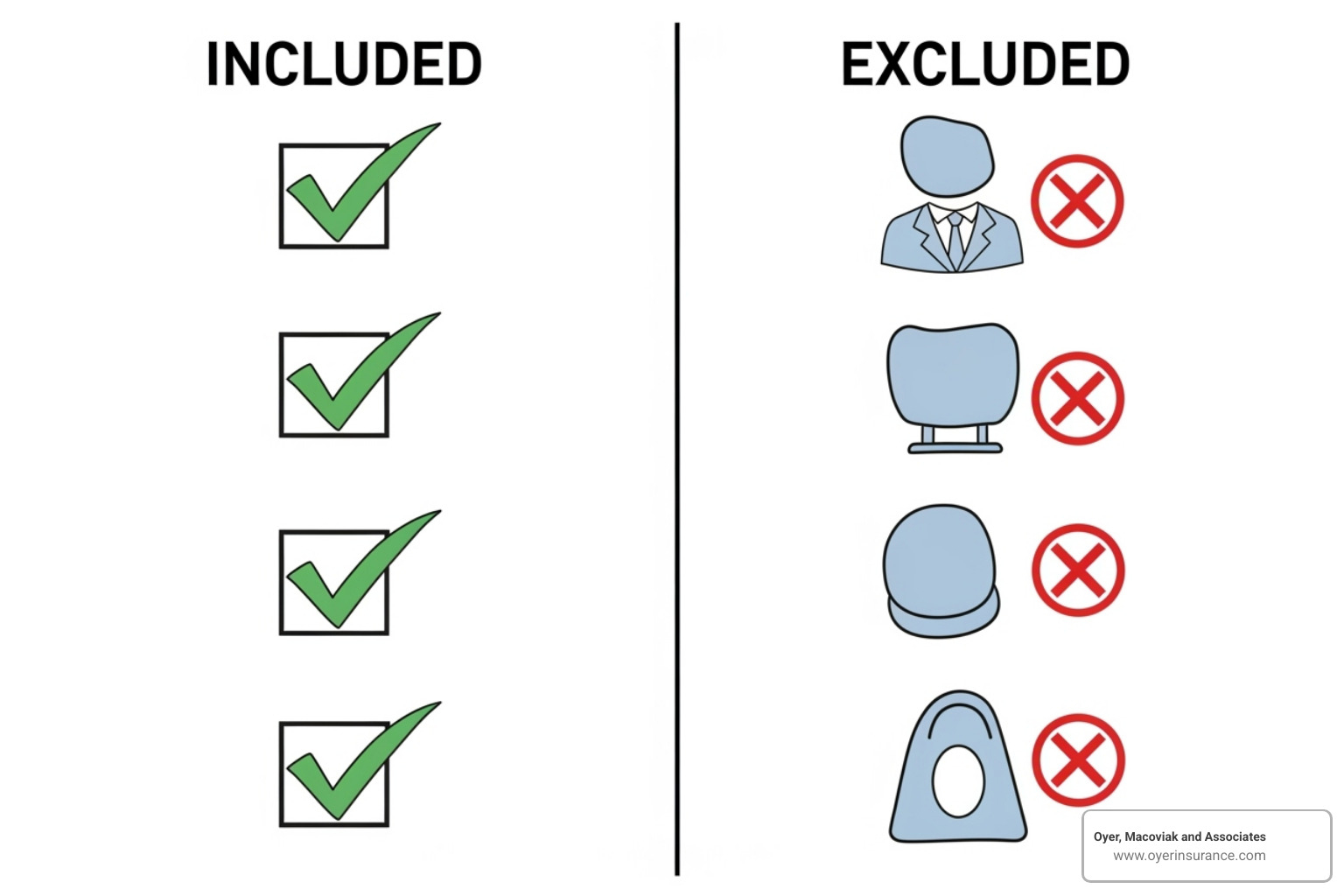
What types of liability does a Personal Umbrella Policy cover?
Your individual umbrella insurance policy acts as a comprehensive safety net for various liability situations. The coverage is surprisingly broad, extending far beyond what most people initially imagine.
Bodily injury liability forms the backbone of umbrella coverage. If you accidentally injure someone – whether through a car accident, a slip-and-fall on your property, or your dog biting a neighbor – your umbrella policy steps in when your primary insurance limits are exhausted. This covers medical bills, lost wages, pain and suffering, and rehabilitation costs.
Property damage liability protects you when you’re responsible for damaging someone else’s belongings. Picture accidentally backing into your neighbor’s prized vintage car. These incidents can result in repair or replacement costs that far exceed your standard policy limits.
Here’s where umbrella coverage gets particularly interesting: personal injury protection goes beyond physical harm to cover reputation-damaging situations. Your policy typically covers libel (written false statements), slander (spoken false statements), and defamation of character. In our social media age, an offhand comment that goes viral could result in a costly lawsuit. The policy also covers invasion of privacy and false arrest, detention, or imprisonment.
If you’re a landlord, your umbrella policy extends landlord liability coverage for incidents on your rental properties, covering claims from tenants or their guests that exceed your property insurance limits.
One of the most valuable aspects is that it handles legal defense costs – attorney fees, court costs, and other legal expenses. Even if a lawsuit against you is groundless, defending yourself can be costly. Your umbrella policy covers these expenses whether you’re found liable or not.
Many individual umbrella insurance policies also provide worldwide coverage, protecting you from liability claims that occur anywhere. This is valuable for frequent travelers who might face different legal systems abroad.
For more insights on how liability coverage works with your homeowners insurance, read our article on 3 Things to Know About Liability Coverage and Homeowners Insurance.
What does a Personal Umbrella Policy NOT cover?
While umbrella coverage is extensive, it’s important to understand its exclusions.
Your individual umbrella insurance is for claims made by other people – it doesn’t cover your own injuries or property damage. For your own injuries, you’ll rely on health insurance and auto personal injury protection. For damage to your property, you’ll need your auto or homeowners insurance.
Intentional or criminal acts are excluded. If you deliberately harm someone or their property, or if damages result from criminal behavior, your umbrella policy won’t help. There are some exceptions for self-defense, but generally, if you meant to cause harm, you’re on your own.
Business-related liability falls outside the scope of personal umbrella coverage. If you run a home-based business or provide professional services, you’ll need separate commercial liability insurance.
Punitive damages – extra penalties courts sometimes impose to punish egregious behavior – may not be covered depending on your jurisdiction and policy terms.
Your policy will also have specific exclusions that might include certain dog breeds, recreational vehicles, or high-risk activities. Always review your policy details to understand exactly what’s excluded.
Are there disadvantages or limitations to an individual umbrella insurance policy?
While the benefits of individual umbrella insurance far outweigh any drawbacks, it’s fair to discuss the limitations.
The most significant requirement is maintaining underlying policy minimums. You can’t buy an umbrella policy by itself; you need specific liability limits on your home and auto insurance first. This is a prerequisite that ensures your umbrella acts as excess coverage.
Business exclusions are a notable limitation. If you have any business activities, professional services, or serve on a paid board, you’ll need separate commercial coverage.
From a cost perspective, while umbrella coverage is affordable, it does add another premium to your budget. However, considering a single lawsuit could cost millions while coverage costs a few hundred dollars annually, most people find it’s worth every penny. We address this in our article Is an Umbrella Policy a Waste of Money?.
Finally, umbrella policies typically aren’t stand-alone products. Most insurers prefer to offer umbrella coverage to clients who also have their home and auto insurance with them. While standalone policies exist, they’re less common.
These limitations are simply the boundaries that define what personal umbrella insurance is designed to do. Understanding them helps ensure you have the right mix of coverage.
Who Needs an Umbrella Policy and Why Is It So Important?
Individual umbrella insurance isn’t just for millionaires. If you own a home, drive a car, or have assets worth protecting, you should consider this coverage. Anyone with a net worth over $500,000—including home equity, savings, and retirement accounts—can benefit from an umbrella policy.
The importance of individual umbrella insurance goes far beyond protecting what you have today. It’s about safeguarding your financial future. One lawsuit can wipe out decades of financial planning, and with legal costs skyrocketing, a minor incident can spiral into a major financial disaster.
It only takes one moment – a distracted driving incident, a guest slipping by your pool, or a careless social media post – to put everything at risk. That’s why umbrella coverage isn’t just insurance; it’s financial peace of mind. To understand who truly benefits from this protection, check out Who Needs Umbrella Insurance? and our insights on why Wealthy Families Need Insurance.

Everyday Risks That Justify Umbrella Coverage
The surprising truth about liability risks is that they’re hiding in plain sight. Homeowners face constant exposure, from the mailman slipping on a walkway to a child getting hurt in the backyard. If you have a swimming pool, trampoline, or even a dog, your risk multiplies significantly.
Car owners represent the biggest category of umbrella claims, with 70% of all claims being auto-related. The statistics are sobering: 25% of these auto claims involve distracted driving, like texting while behind the wheel. If you’re a parent of teen drivers, your risk shoots up even higher, as they are statistically more likely to cause accidents.
Pet owners often underestimate their exposure. Even a friendly dog can bite when startled, and you’re legally responsible for any injuries. Social media users face modern liability risks like libel, slander, or invasion of privacy claims that standard policies won’t cover.
If you’re a landlord, you’re responsible for incidents on your rental properties. Volunteers who coach youth sports or serve on nonprofit boards can face personal liability. Even people with high-risk hobbies like boating or ATVs need extra protection.
These aren’t rare risks—they’re everyday activities that millions of people engage in.
Protecting Your Assets and Future from a Major Lawsuit
When you’re found liable for damages that exceed your primary insurance limits, the injured party can pursue your personal assets. Your savings and investments, including retirement accounts, become fair game. Your home equity can be subject to liens or forced sale.
Perhaps most frightening is wage garnishment. Courts can order a portion of your future income to be diverted to pay off a judgment for years to come. Imagine a significant portion of your paycheck going to someone else because of one unfortunate incident.
This is where individual umbrella insurance becomes your financial lifeline. It creates a protective barrier between a massive lawsuit and everything you’ve worked to build. The policy doesn’t just protect your current net worth; it shields your future earning potential.
With 70% of umbrella claims being auto-related, the risk is very real. You don’t need to be wealthy to be targeted by a lawsuit—you just need to have something worth pursuing. For more insights on protecting what matters most, read Why You Should Consider Purchasing Umbrella Insurance to Protect Your Personal Assets.
The bottom line? Individual umbrella insurance isn’t about being paranoid; it’s about being prepared. It’s one of the most cost-effective ways to protect your financial security.
The Cost and Requirements of an Individual Umbrella Insurance Policy
Individual umbrella insurance is surprisingly affordable for the amount of protection it provides. It’s a cost-effective way to secure your financial future against catastrophic liability claims, and clients are often surprised by how little it costs to add this security. The peace of mind it provides far outweighs the modest annual investment. To help you understand the financial aspects, we have a detailed guide on Calculating Your Umbrella Insurance Policy Cost: A Step-by-Step Guide, and further insights on Umbrella Insurance: Why Is It Important and Who Needs It?.
How Much Does Umbrella Insurance Typically Cost?
The annual cost of an individual umbrella insurance policy is remarkably low for the coverage you receive. For less than a dollar a day, you can protect everything you’ve worked so hard to build.
For a $1 million personal umbrella insurance policy, the annual cost typically ranges from approximately $150 to $300. This minimum premium can be as low as $129 for some policies, which breaks down to roughly $12 to $25 per month.
Adding more coverage is also very affordable. For a personal umbrella policy, the next million in coverage after the first $1 million costs about $75. For every million after that, the cost drops to around $50. This tiered pricing makes it economical to increase your coverage as your assets grow.
The exact premium you pay will depend on several risk factors. Your driving record plays a significant role; a clean record means lower premiums. The type of property you own matters too, as a home with a swimming pool carries more risk.
Your location also influences pricing. Generally, the more assets you have, the higher the coverage you’ll need, which can slightly increase the premium. The insurer you choose will also affect your rate.
Considering a single major lawsuit could cost millions, paying a few hundred dollars a year for an individual umbrella insurance policy represents exceptional value for money.
What Are the Underlying Coverage Requirements?
An individual umbrella insurance policy acts as an excess layer of coverage, so insurers require you to maintain certain minimum liability limits on your underlying policies. This ensures your umbrella policy is supplemental, not a replacement for basic coverage.
While specific requirements can vary by insurer, here are the typical minimum liability limits most carriers require:
Auto insurance requirements typically include about $250,000 of bodily injury liability per person, $500,000 per accident, and $100,000 for property damage. Homeowners insurance requirements usually call for at least $300,000 of liability insurance.
If your current policies don’t meet these thresholds, you’ll need to increase their liability limits before you can purchase an individual umbrella insurance policy. Our professionals can help you assess your current coverage and determine what adjustments are needed.
Often, bundling policies by purchasing your umbrella, home, and auto insurance from the same insurer can lead to cost savings through discounts.
To illustrate the financial protection an individual umbrella insurance policy provides, let’s look at a comparison:
| Scenario: $1 Million Lawsuit | Without Umbrella Policy (Only Standard Auto/Home) | With $1 Million Umbrella Policy |
|---|---|---|
| Total Damages Awarded | $1,000,000 | $1,000,000 |
| Auto/Home Insurance Covers | $300,000 (example limit) | $300,000 |
| Umbrella Policy Covers | $0 | $700,000 |
| Out-of-Pocket Cost | $700,000 | $0 |
This table clearly shows how a small annual investment in an individual umbrella insurance policy can save you from a financially devastating situation. The average homeowner only carries $300,000 in liability coverage, leaving a significant gap if a major claim occurs.
The difference between facing a $700,000 personal financial obligation and walking away protected is what makes umbrella insurance a smart investment.
Conclusion: Secure Your Financial Future with the Right Protection
Life can be unpredictable, and a single accident can lead to a million-dollar lawsuit. That’s why individual umbrella insurance exists – to protect you when unexpected events threaten to wash away everything you’ve worked so hard to build.
We’ve seen how this essential coverage acts as your financial safety net, stepping in when your regular home and auto insurance reach their limits. Whether it’s covering massive medical bills from an accident, defending you against defamation claims, or protecting your assets from a lawsuit involving a rental property, individual umbrella insurance provides the broad protection today’s world demands.
The numbers speak for themselves. For just a few hundred dollars a year, you can secure millions in coverage. Compare that to the potential devastation of a major lawsuit – where you could lose your home, drain retirement savings, and face wage garnishment – and the choice becomes clear.
This isn’t just coverage for millionaires. If you own a home, drive a car, have a dog, or post on social media, you’re exposed to liability risks that could be financially ruinous. Individual umbrella insurance is your shield against these everyday dangers.
At Oyer, Macoviak and Associates, we’ve been helping families steer these waters since 1953. We understand that every family’s situation is unique, which is why we work with over 30 “A” rated companies to find you the perfect policy at the right price. Our professionals across Florida, Georgia, North Carolina, and Tennessee are committed to making sure you have the protection you need.
Don’t wait for the storm to hit before you look for shelter. The time to protect your financial future is now.

Ready to secure your peace of mind? Get a quote for umbrella insurance today and find how affordable individual umbrella insurance can be. Your future self will thank you for taking this important step toward complete financial protection.

Robert Macoviak is the President of Oyer, Macoviak and Associates. Oyer, Macoviak and Associates is the oldest independent insurance agency in Boynton Beach and has been in business since 1953. Oyer, Macoviak and Associates are vested members of the community who are committed to doing business face-to-face and being your insurance advocate in times of need.